
Thoracic Disc Herniation
Symptoms, Causes, and How to Find Relief
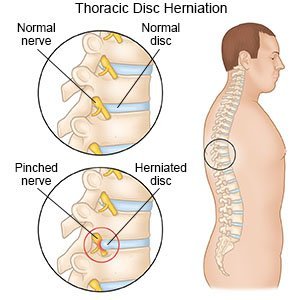
Thoracic disc herniation occurs when the soft inner core of a spinal disc in your mid-back pushes out through its tough outer layer. This can put pressure on nearby nerves or the spinal cord, causing pain and discomfort that can wrap around your chest, ribs, or upper back.
How Does Thoracic Disc Herniation Feel?
- Mid-Back Pain: An aching, sharp, or stabbing pain located between the shoulder blades or directly in the middle of the back.
- Radiating Sensation: Pain that shoots or wraps around the rib cage, sometimes feeling like a tight band squeezing the chest or abdomen.
- Numbness or Tingling: A “pins and needles” feeling that spreads into the chest, stomach, or down into the legs.
- Muscle Weakness: Noticeable weakness in the legs, or in severe cases, changes in bowel or bladder control (which require immediate medical attention).
Common Causes of Thoracic Disc Herniation
This condition may occur due to several reasons, including:
- Age-Related Wear and Tear: Over time, spinal discs naturally lose moisture and become less flexible, making them more prone to cracking or tearing.
- Trauma or Injury: A sudden impact, such as a heavy fall, sports injury, or car accident, can cause a disc in the mid-back to rupture.
- Heavy Lifting: Improperly lifting heavy objects, especially while twisting the torso, can place excessive and sudden strain on the thoracic spine.
- Repetitive Stress: Continuous twisting, bending, or highly physically demanding work can gradually weaken the disc’s tough outer layer.
Diagnosis and Treatment
A healthcare provider will likely diagnose a thoracic disc herniation through physical exams, focusing on evaluating your mobility, reflexes, and feeling the spine for tenderness. They may also ask about your symptoms and any activities that may have triggered the pain. Imaging tests, like an MRI, are often used to clearly see the discs and confirm if a nerve is being compressed.
Treatment often begins with conservative methods like:
- Chiropractic Care: Gentle spinal adjustments and decompression techniques can help restore proper alignment, relieve pressure on the compressed disc, and reduce nerve pain.
- Stretching & Strengthening: Exercises that improve posture and strengthen the muscles around the ribs and back can prevent future pain and better support the spine.
- Ice or Heat Therapy: Applying ice or heat to the affected area may help relieve pain and reduce inflammation.
- Postural Correction: If poor posture or repetitive movements caused the issue, correcting these habits can prevent further strain on the mid-back.
Ready to Find Relief?
Call 952-594-5955 or schedule your appointment online to recover faster and move better.