
Thoracic Outlet Syndrome
Symptoms, Causes, and How to Find Relief
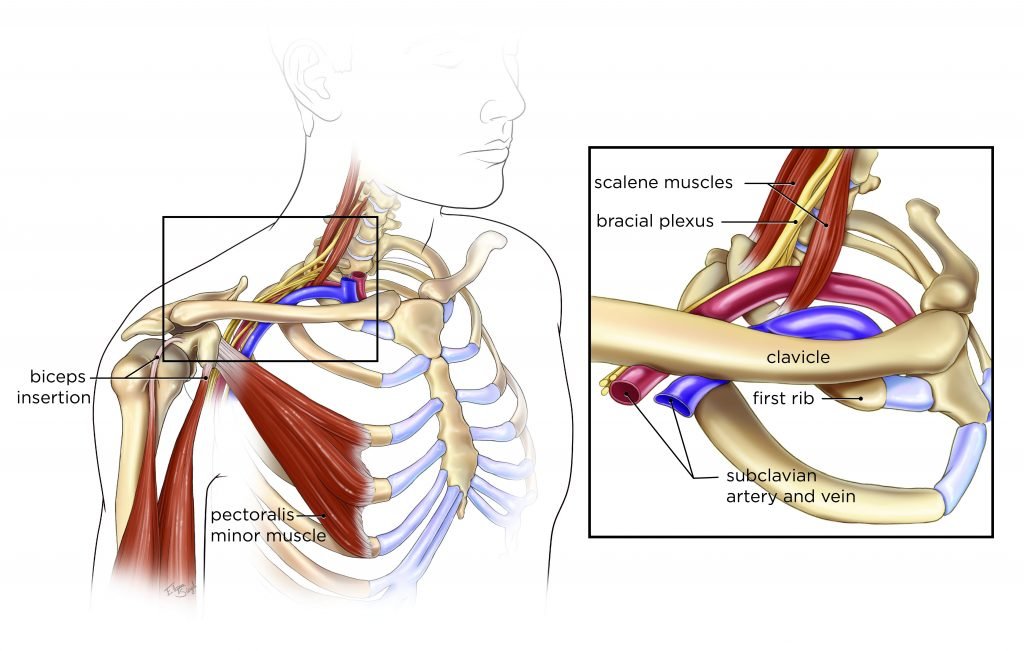
Thoracic outlet syndrome is a group of disorders that occur when blood vessels or nerves in the space between your collarbone and your first rib are compressed. This compression can cause pain in your shoulders and neck, as well as numbness or tingling in your fingers. Though it can be frustrating, most people experience significant relief with conservative care and proper management.
How Does Thoracic Outlet Syndrome Feel?
- Numbness or Tingling: A “pins and needles” sensation extending down the arm, often reaching into the fingers or hand.
- Aching Pain: Persistent pain or a dull ache located in your neck, shoulder, or arm.
- Weakness: A noticeable weakening in your grip, making it difficult to hold onto objects.
- Circulation Changes: In some cases, the hand or fingers may feel cold, swell, or appear slightly discolored if the blood vessels are being compressed.
Common Causes of Thoracic Outlet Syndrome
This condition may occur due to several reasons, including:
- Poor Posture: Drooping shoulders or constantly holding the head in a forward position can slowly compress the thoracic outlet space over time.
- Trauma: A sudden traumatic event, such as a car accident causing a whiplash neck injury, can lead to internal changes that compress the nerves in the lower neck and upper chest.
- Repetitive Stress: Repeated overhead motions—like those used in swimming, baseball, heavy lifting, or working on a computer—can strain the tissues and cause inflammation.
- Anatomical Variations: Some people are born with an extra cervical rib or abnormally tight fibrous bands connecting their spine to their ribs, naturally predisposing them to compression.
Diagnosis and Treatment
A healthcare provider will typically diagnose thoracic outlet syndrome by reviewing your medical history, assessing your posture, and performing specific physical exams to intentionally reproduce your symptoms and pinpoint the exact source of compression. They may also order imaging tests, like X-rays, or nerve conduction studies to rule out other issues and confirm the diagnosis.
Treatment often begins with conservative methods like:
- Chiropractic Care: Targeted adjustments to the collarbone, first rib, and neck can help restore proper alignment, relieve pressure on the compressed nerves, and improve overall mobility.
- Physical Therapy & Stretching: Specific exercises can strengthen the shoulder muscles, open up the thoracic outlet space, and relieve daily strain on your nerves and blood vessels.
- Postural Correction: Learning proper ergonomics and improving your posture during daily activities can prevent further compression and support long-term healing.
- Myofascial Release: A hands-on technique involving gentle, sustained pressure to stretch and soften the connective tissue surrounding your muscles to eliminate pain and restore motion.
Ready to Find Relief?
Call 952-594-5955 or schedule your appointment online to recover faster and move better.